


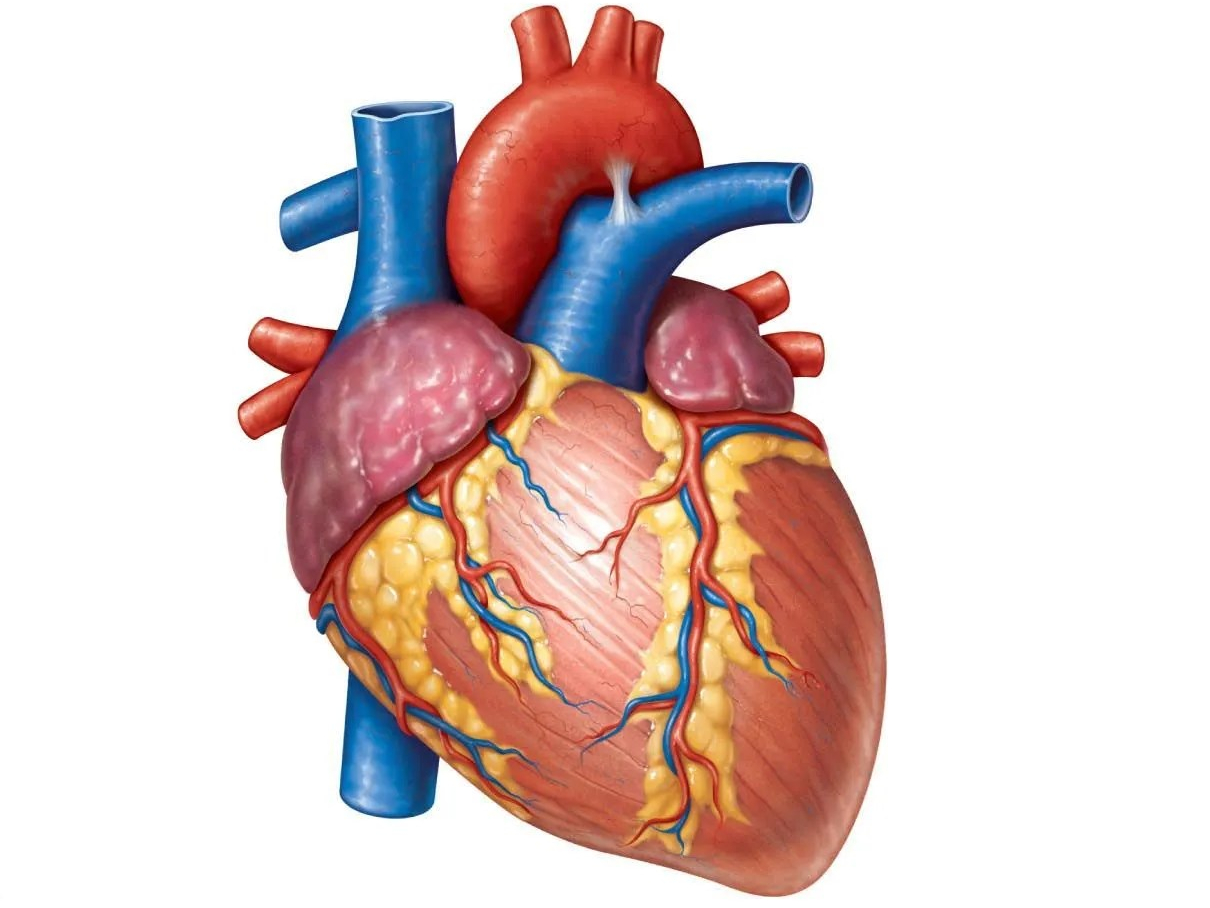
Vocabulary
| Anatomy | Physiology | Respiration | Atria / Atrium |
| Ventricle | Deoxygenated | Vein | Pulmonary |
| Circulation | Pressure | Lungs | Valve |
| Tricuspid | Mitral | Contraction | Pacemaker |
Anatomy & Physiology
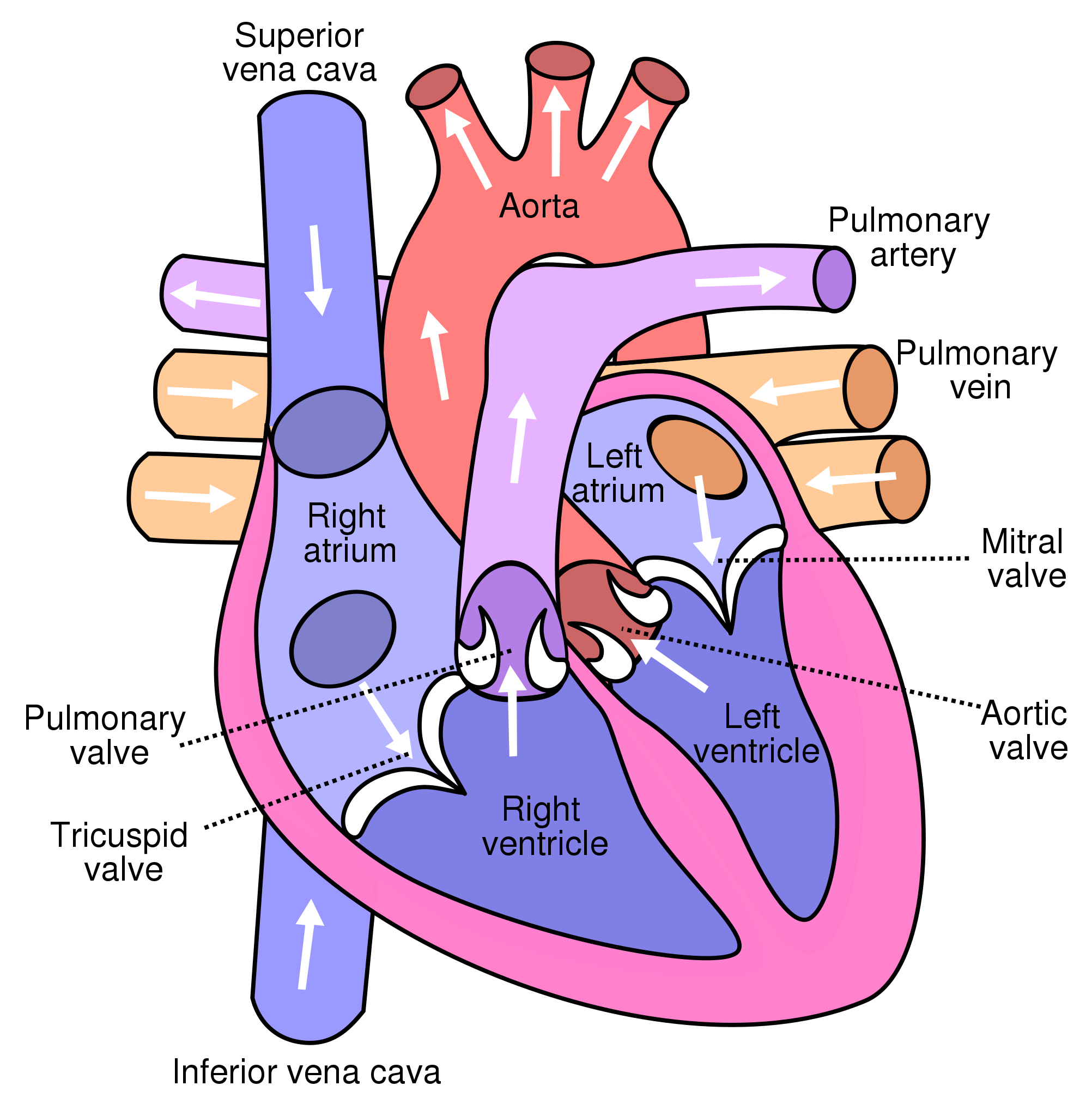
The heart comprises two muscular pumps covered in a serous sac (pericardium) that allows free movement with each heart beat and respiration.
The right heart (right atrium and ventricle) pumps deoxygenated blood returning from the veins into the pulmonary circulation at relatively low pressures.
The left heart (left atrium and ventricle) receives blood from the lungs and pumps it round the body to the tissues at higher pressures. Atrioventricular valves (tricuspid on the right side, mitral on the left) separate the atria from the ventricles.
The pulmonary valve on the right side of the heart and the aortic valve on the left separate the ventricles from the pulmonary and arterial systems, respectively.
Cardiac contraction is coordinated by specialised groups of cells. The cells in the sinoatrial node normally act as the cardiac pacemaker.
Subsequent spread of impulses through the heart ensures that atrial contraction is complete before ventricular contraction (systole) begins. At the end of systole the ventricles relax and the atrioventricular valves open, allowing them to refill with blood from the atria (diastole).
Questions
1) What is the heart comprised of?
2) What does the heart do?
3) What does the right heart do?
4) What does the left heart do?
5) What are the two parts of both the right and left heart?
6) What is the name of the right-sided valve?
7) What is the name of the left-sided valve?
8) What acts as the cardiac pacemaker?