
Trauma, Illness & Healing in A Toxic Culture
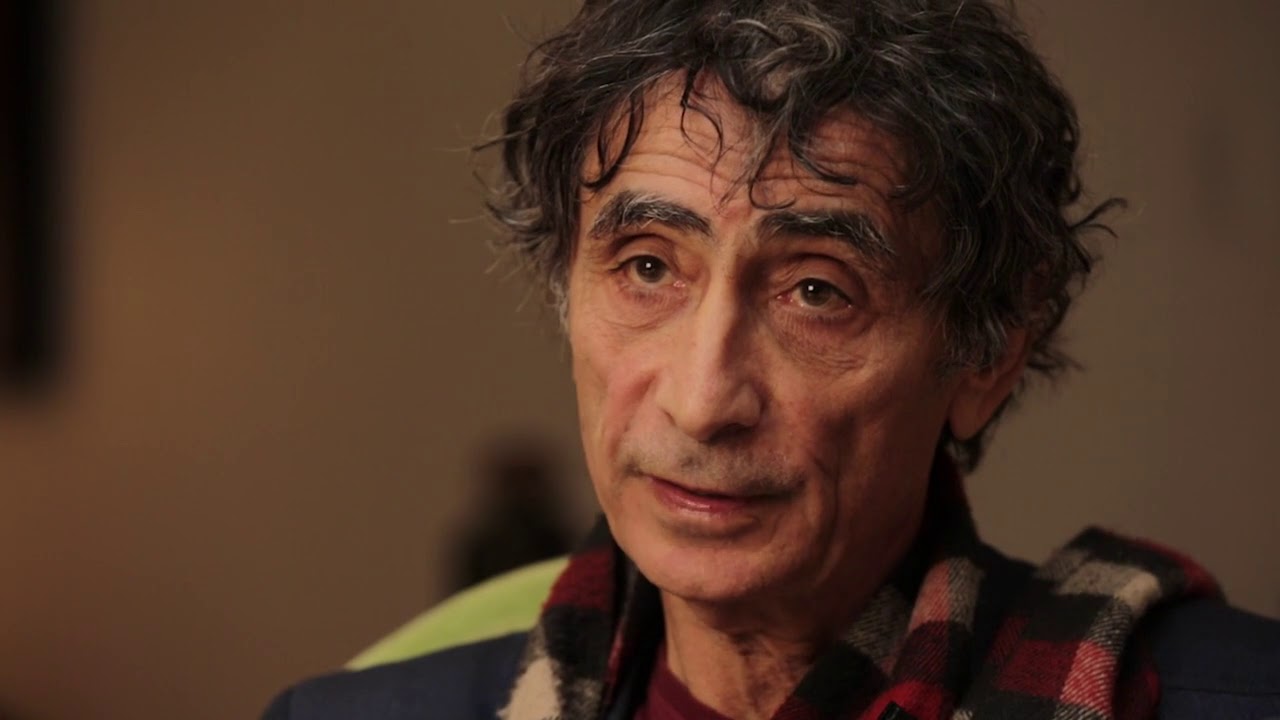
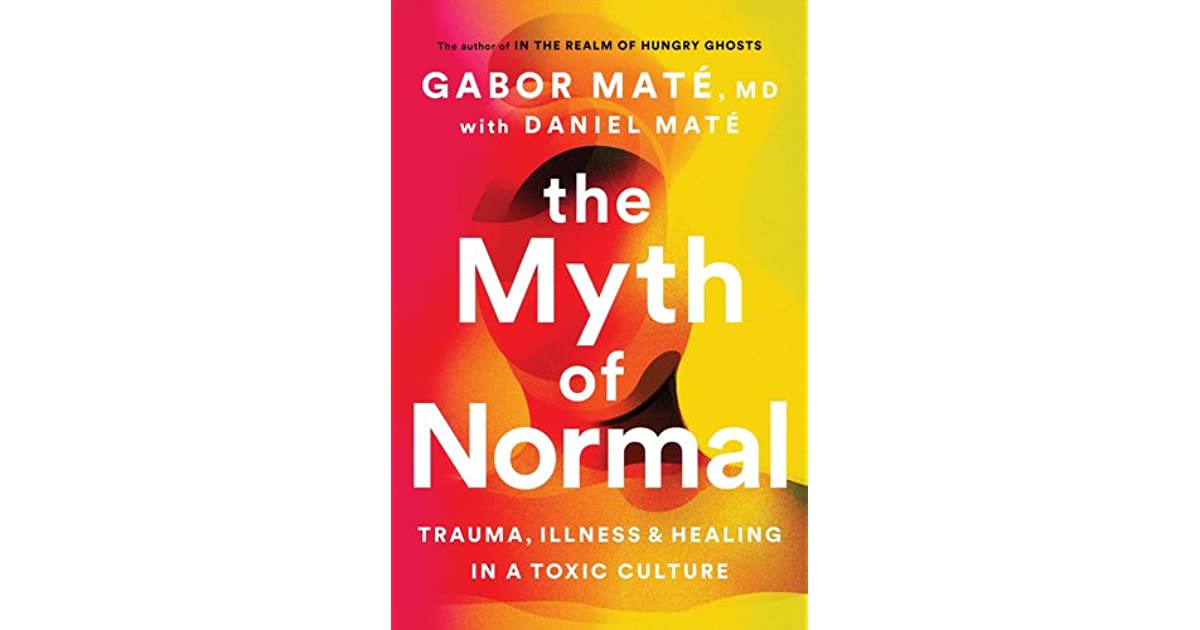
Myth of Normal is the latest book from Dr Gabor Mate, where, through his decades of experience and insight, he explains how much of illness and health can be link to various factors that cause trauma in our lives. Not just the severe, or capital-T trauma, as it is referred to, but also the small-t traumas that occur in our everyday lives.
This article aims to offer a small peek into the contents of the book by selecting some key extracts that may spark curiosity within as well as sharing valuable insight, and helping to share Gabor Mate’s insight for the benefit, learning and education of others.
The following extracts have been selected from the introductory of the book, to offer the reader a preview of the contents that can be used for educational purposes.
“The fact that millions of people share the same vices does not make these vices virtues, the fact that they share so many errors does not make the errors to be truths, and the fact that millions of people share the same forms of mental pathology does not make these people sane.“
—Erich Fromm, The Sane Society
Chronic illness—mental or physical—is to a large extent a function or feature of the way things are and not a glitch; a consequence of how we live, not a mysterious aberration.
The phrase “a toxic culture” is used to characterize something even broader and more deeply rooted: the entire context of social structures, belief systems, assumptions, and values that surround us and necessarily pervade every aspect of our lives.
In the United States, the richest country in history and the epicentre of the globalized economic system, 60 percent of adults have a chronic disorder such as high blood pressure or diabetes, and over 40 percent have two or more such conditions. Nearly 70 percent of Americans are on at least one prescription drug; more than half take two.
In Europe, according to the authors of a recent international survey, mental disorders have become “the largest health challenge of the 21st century.” A chilling 2019 headline on the online news site ScienceAlert speaks for itself: “Child Suicide Attempts Are Skyrocketing in the US, and Nobody Knows Why.” The picture is similarly stark in the U.K., where the Guardian recently reported, “British universities are experiencing a surge in student anxiety, mental breakdowns and depression.” As globalization envelops the world, conditions hitherto found in “developed” countries are finding their way into new venues. ADHD among children, for example, has become “an increasing public health concern” in China.
“Distress about climate change is associated with young people perceiving that they have no future, that humanity is doomed,” found the authors of a 2021 survey of the attitudes of over ten thousand individuals in forty-two countries. Along with a sense of betrayal and abandonment by governments and adults, such despondence and hopelessness “are chronic stressors which will have significant, long-lasting and incremental negative implications on the mental health of children and young people.”
Casting ourselves as the organisms in the laboratory analogy, these and other metrics indicate unmistakably that ours is a toxic culture. Worse yet, we have become accustomed —or perhaps better to say acculturated—to so much of what plagues us. It has become, for lack of a better word, normal.
For better or worse, we humans have a genius for getting used to things, especially when the changes are incremental. The newfangled verb “to normalize” refers to the mechanism by which something previously aberrant becomes normal enough that it passes beneath our radar. On a societal level, then, “normal” often means “nothing to see here”: all systems are functioning as they should, no further inquiry needed.
“the most obvious, ubiquitous, important realities are often the ones hardest to see and talk about.”
Features of daily life that appear to us now as normal are the ones crying out the loudest for our scrutiny.
Much of what passes for normal in our society is neither healthy nor natural, and that to meet modern society’s criteria for normality is, in many ways, to conform to requirements that are profoundly abnormal in regard to our Nature-given needs—which is to say, unhealthy and harmful on the physiological, mental, and even spiritual levels.
If we could begin to see much illness itself, not as a cruel twist of fate or some nefarious mystery, but rather as an expected and normal consequence of abnormal, unnatural circumstances, it would have revolutionary implications for how we approach everything health related. The unhealthy bodies and minds among us would no longer be regarded as expressions of individual pathology but as living alarms directing our attention toward where our society has gone askew, and where our assumptions around health are in fact, fictions. Seen clearly, they might also give us clues as to what it would take to reverse course and build a healthier world.
The current medical paradigm bears more resemblance to an ideology than to empirical knowledge. It reduces complex events to their biology, and it separates mind from body, concerning itself almost exclusively with one or the other without appreciating their essential unity.
One of the most persistent and calamitous failures handicapping our health systems is an ignorance—in the sense either of not knowing or of actual, active ignoring—of what science has already established.
For me, the process of putting the pieces together began several decades ago when, on a hunch, I went beyond the standard repertoire of dry doctorly questions about symptom presentation and medical history to ask my patients about the larger context for their illnesses: their lives. I am grateful for what these men and women taught me through how they lived and died, suffered and recovered, and through the stories they shared with me. Health and illness are not random states in a particular body or body part. They are, in fact, an expression of an entire life lived, one that cannot, in turn, be understood in isolation: it is influenced by—or better yet, it arises from—a web of circumstances, relationships, events, and experiences.
At each stage, my task is to lift the veil of common knowledge and received wisdom, considering what science and watchful observation tell us, with the aim of unfastening the myths that keep the status quo locked in place. As in my previous books, the science and its health implications will be brought home via real-life stories and case studies of people who have generously shared something of their journeys through illness and health with me. These range from the mildly surprising to the truly incredible, the heartbreaking to the inspiring.
When we can look soberly at what we as a culture have normalized about health and illness, and realize that it is not, in fact, the way things are meant or fated to be, there arises the possibility of returning to what Nature has always intended for us.
Gabor Mate, MD